Hot summer weather can be uncomfortable for your cockatiel and, under the wrong conditions, can become a serious health risk. Cockatiels are naturally adapted to warm environments, but that does not mean a pet cockatiel can safely tolerate unlimited heat. Direct sunlight, poor ventilation, dehydration, high humidity, and a hot indoor room can all increase the risk of overheating.
The good news is that preventing heat stress is usually much easier than dealing with an emergency. With fresh water, shade, good airflow, sensible activity, and regular observation, you can make your cockatiel’s environment much safer during hot weather.
In this guide, you will learn how to keep a cockatiel cool in hot weather, how to recognize early signs of overheating, what to do if your bird becomes too hot, and which common summer mistakes you should avoid.
Important: If your cockatiel is severely weak, struggling to breathe, collapsing, losing balance, or becoming unresponsive, do not rely only on home cooling methods. Contact an avian veterinarian as soon as possible.
Table of Contents
- Why Hot Weather Can Be Dangerous for Cockatiels
- Signs Your Cockatiel May Be Too Hot
- How to Keep Your Cockatiel Cool in Hot Weather
- What Temperature Is Too Hot for a Cockatiel?
- What to Do If Your Cockatiel Is Overheating
- Summer Mistakes Cockatiel Owners Should Avoid
- A Simple Summer Routine for Your Cockatiel
- Can Cockatiels Stay Outside in Summer?
- Frequently Asked Questions
- Final Thoughts
Why Hot Weather Can Be Dangerous for Cockatiels
Cockatiels come from Australia and are naturally exposed to warm and sometimes very dry conditions. However, a pet cockatiel lives in a completely different environment from a wild bird. A cage near a sunny window, a poorly ventilated room, or an outdoor cage exposed to direct afternoon sunlight can become dangerously hot.
Birds also do not cool themselves by sweating like humans do. Instead, they rely on behaviors and physiological mechanisms that help release excess body heat. A bird may change its posture, hold its wings slightly away from its body, or increase its respiratory rate when it becomes too warm.
This is why the temperature of the area immediately surrounding your cockatiel can be more important than the temperature reported by a weather application.
Factors That Can Increase the Risk of Overheating
- Direct sunlight hitting the cage
- Poor ventilation
- Very hot indoor temperatures
- Lack of clean drinking water
- Dehydration
- High humidity combined with heat
- Intense exercise during the hottest part of the day
- Outdoor exposure without permanent shade
- Being left inside a vehicle
- Underlying illness or weakness
The safest summer strategy is not to wait for your cockatiel to show obvious signs of overheating. Instead, create a comfortable environment before the hottest part of the day arrives.
Signs Your Cockatiel May Be Too Hot
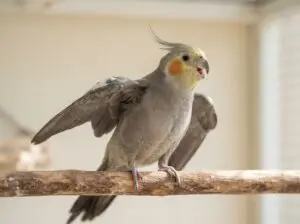
Knowing your bird’s normal behavior is one of the best ways to notice a problem early. A cockatiel that suddenly behaves differently during hot weather deserves closer attention.
1. Panting or Open-Mouth Breathing
One of the most noticeable warning signs is breathing with the beak open or breathing unusually rapidly while resting.
Birds can increase respiratory activity to help release heat. However, persistent open-mouth breathing should never simply be dismissed as normal summer behavior, particularly when the bird is sitting quietly and has not just finished flying.
If your cockatiel is panting while resting, move it away from heat and observe it carefully. If the breathing remains abnormal or appears difficult, contact an avian veterinarian.
2. Holding the Wings Away From the Body
A hot cockatiel may hold its wings slightly away from its body. This can help increase the exposed surface area and improve heat loss.
Seeing this behavior together with rapid breathing, weakness, or unusual inactivity is more concerning than seeing the posture alone.
3. Increased Drinking
Your cockatiel may drink more frequently during hot weather. Increased water intake can be a normal response to increased heat and fluid loss.
However, excessive thirst can also have causes unrelated to temperature. Look at the complete picture rather than using drinking behavior alone to determine whether your bird is overheating.
4. Unusual Weakness or Lethargy
A cockatiel that suddenly becomes unusually quiet, weak, unsteady, or reluctant to move should be taken seriously.
Birds are well known for hiding signs of illness. A bird that looks significantly weaker than normal may need veterinary evaluation rather than simply a cooler room.
5. Loss of Balance or Collapse
Loss of balance, falling from the perch, sitting on the cage floor, collapse, or unresponsiveness are serious warning signs.
Do not wait to see whether the bird improves on its own. Move the bird away from heat, minimize stress, and contact an avian veterinarian immediately.
6. Changes in Normal Behavior
Sometimes the first clue is simply that your cockatiel does not seem like itself.
Pay attention to sudden changes in:
- Activity level
- Appetite
- Drinking
- Posture
- Breathing
- Balance
- Vocalization
A noticeable combination of changes is more important than any single behavior.
How to Keep Your Cockatiel Cool in Hot Weather
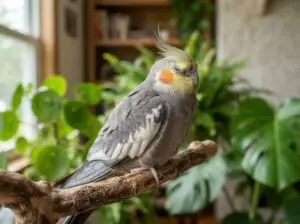
1. Keep the Cage Away From Direct Sunlight
This is one of the easiest and most important summer precautions.
Natural daylight can be beneficial, but your cockatiel should never be trapped in direct sunlight without access to shade. Sunlight can heat a cage surprisingly quickly, especially through glass windows.
A better arrangement is to position the cage where your cockatiel has a comfortable shaded area while still receiving normal daylight.
If you allow your bird to spend time outdoors, shade should always be available and the bird should never be left unattended in extreme heat.
2. Improve Air Circulation
Good ventilation can make a hot room considerably more comfortable.
Depending on your home and outdoor conditions, you can improve airflow by opening appropriate windows or using a fan to circulate room air.
However, avoid pointing a powerful fan directly at your cockatiel for extended periods. The goal is comfortable air movement throughout the room, not a strong stream of air hitting the bird.
Also keep your bird away from smoke, aerosols, cooking fumes, and other airborne contaminants. Birds have highly efficient respiratory systems and can be particularly sensitive to airborne pollutants.
3. Use Air Conditioning Carefully
Air conditioning can be very useful during extreme summer temperatures because it allows you to keep the room at a more comfortable level.
The important point is to cool the room rather than exposing your cockatiel directly to a powerful stream of cold air.
Do not place the cage immediately underneath an air-conditioning vent. A stable and comfortable environment is preferable to repeated dramatic temperature changes.
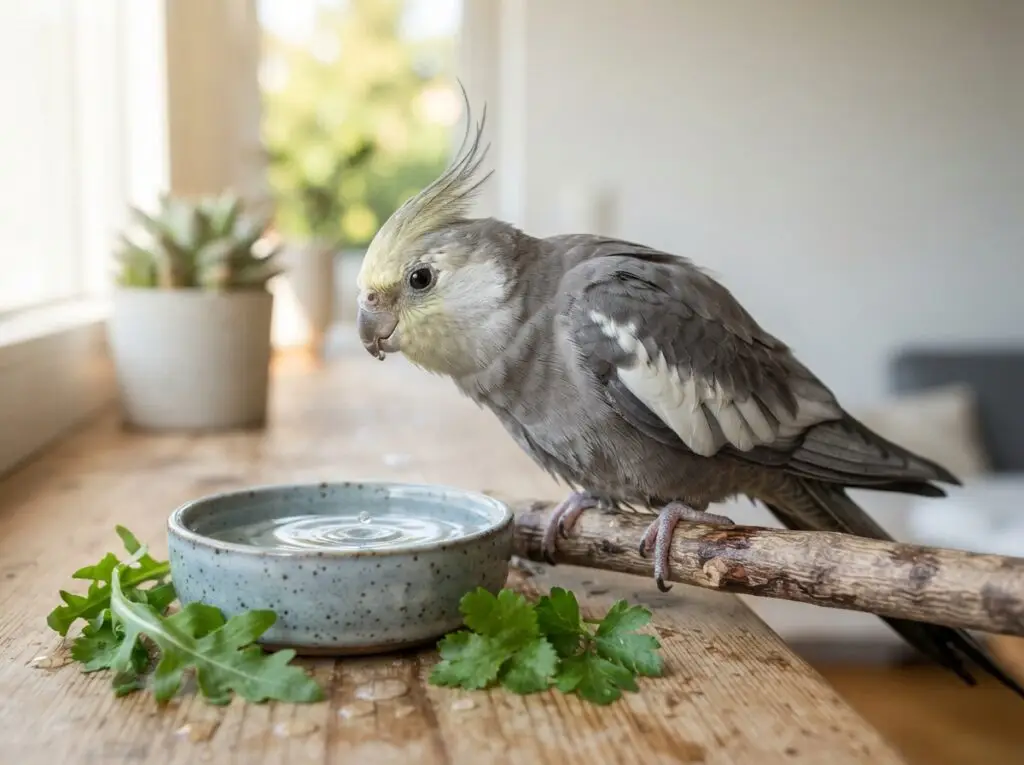
4. Provide Fresh Drinking Water at All Times
Clean drinking water should always be available.
During hot weather, check the water more frequently because it can become contaminated with food, feathers, dust, or droppings.
A practical summer routine is to replace the water in the morning, check it again around midday, and replace it again whenever it becomes dirty.
If you use more than one water container, clean all of them regularly rather than assuming that having multiple bowls eliminates the need for maintenance.
5. Offer a Safe Bathing Opportunity
Many cockatiels enjoy bathing, and a shallow bath can be an excellent form of summer enrichment.
You can provide a clean, shallow dish that allows your bird to stand comfortably in the water. Some cockatiels may also enjoy gentle misting with clean water.
However, never force a bird to bathe if it becomes frightened or stressed by water.
Bathing should also not be considered a treatment for severe overheating. A bird showing serious heat-stress symptoms needs a cooler environment and potentially professional veterinary care.
6. Reduce Intense Activity During the Hottest Hours
Flying and active play are healthy activities for cockatiels, but physical activity also generates body heat.
During very hot days, schedule more energetic activities during the cooler morning or evening hours.
For example:
- Morning: Flying, training, and active play
- Midday: Quiet enrichment and rest
- Afternoon: Calm activities in a shaded, well-ventilated room
- Evening: Gentle play and normal interaction
This simple change can reduce unnecessary heat production during the hottest part of the day.
7. Keep Fresh Foods Fresh
Fresh vegetables and suitable fruits can contribute to a balanced diet and may provide additional moisture. However, they should never replace your cockatiel’s drinking water.
Fresh food also spoils more quickly in warm conditions. Remove uneaten fresh foods promptly rather than allowing them to remain in the cage for hours.
This is particularly important during summer because warm temperatures can accelerate food spoilage.
8. Use a Digital Thermometer Near the Cage
Your home’s thermostat may not tell you exactly what your cockatiel is experiencing.
A simple digital thermometer placed near the cage can help you understand the actual conditions around your bird.
This becomes especially useful if the cage is close to a window, in an upstairs room, or in an area that becomes warmer during the afternoon.
Temperature readings should be considered together with your cockatiel’s behavior, hydration, breathing, and overall condition.
What Temperature Is Too Hot for a Cockatiel?
There is no single temperature number that automatically means every cockatiel is in danger.
Heat tolerance can vary depending on the bird’s health, age, acclimatization, hydration, humidity, airflow, activity level, and whether the bird is exposed to direct sunlight.
For this reason, responsible summer care should not be based on a thermometer alone.
Instead, use the thermometer to monitor the environment and combine that information with your bird’s behavior.
A healthy cockatiel sitting comfortably, breathing normally, eating, drinking, and behaving normally is very different from a bird sitting with its wings held away from its body and breathing with an open beak.
What to Do If Your Cockatiel Is Overheating
If you believe your cockatiel is becoming overheated, stay calm and act quickly.
Step 1: Move the Bird Away From the Heat
Move the cage or bird to a cooler, shaded, well-ventilated location.
If direct sunlight is hitting the cage, remove the bird from that exposure immediately.
Step 2: Reduce Activity and Stress
Do not encourage your cockatiel to fly.
Keep the environment quiet and minimize unnecessary handling. A stressed bird may use additional energy and become more difficult to monitor.
Step 3: Provide Clean Drinking Water
Make sure fresh drinking water is easily accessible.
Never force water into the beak of a weak or distressed bird. Attempting to force liquids can create additional problems, particularly if the bird is having difficulty breathing.
Step 4: Improve Room Airflow
Gentle air circulation can help make the environment more comfortable.
Avoid aggressive cooling methods or placing the bird directly in front of a powerful fan or air-conditioning vent.
Step 5: Monitor the Bird Closely
Watch the cockatiel’s:
- Breathing
- Balance
- Activity
- Responsiveness
- Posture
- Drinking
If the bird does not improve or develops severe symptoms, contact an avian veterinarian immediately.
Summer Mistakes Cockatiel Owners Should Avoid
Mistake #1: Leaving the Cage in Direct Sunlight
A cage that feels comfortable in the morning can become extremely warm when afternoon sunlight reaches it.
Better approach: Keep a shaded area available at all times.
Mistake #2: Leaving a Cockatiel Inside a Car
Never leave your cockatiel unattended inside a parked vehicle during warm weather.
Vehicles can heat up extremely quickly, creating a dangerous environment even when the outside temperature does not seem extreme.
Mistake #3: Waiting Until the Bird Is Panting Heavily
Visible panting should not be your summer warning system.
Prepare the environment before the hottest part of the day and monitor your bird regularly.
Mistake #4: Using Extreme Cold to Cool the Bird
The goal is controlled environmental cooling, not exposing the bird to an extreme temperature change.
Move the bird away from heat, provide a comfortable environment, and seek professional advice when symptoms are severe.
Mistake #5: Covering the Cage With a Thick Blanket
A thick cover may trap heat and reduce ventilation.
During hot weather, prioritize shade and airflow rather than creating an enclosed, poorly ventilated space.
Mistake #6: Assuming Cockatiels Cannot Overheat
Cockatiels are associated with Australia’s warm climate, but that does not make them immune to heat stress.
A pet cockatiel can still become dangerously overheated when exposed to excessive heat, direct sunlight, dehydration, or poor airflow.
A Simple Summer Routine for Your Cockatiel
Morning
- Replace drinking water.
- Check the room temperature.
- Inspect your cockatiel’s behavior.
- Allow normal exercise and play while the room is cooler.
- Provide the normal morning meal.
Midday
- Check the water again.
- Make sure the cage is shaded.
- Reduce strenuous activity.
- Check airflow around the cage.
Afternoon
- Keep the cage away from direct sunlight.
- Monitor breathing and posture.
- Provide a safe bathing opportunity if your cockatiel enjoys it.
- Replace dirty water immediately.
Evening
- Allow gentle activity.
- Replace contaminated water.
- Check that your cockatiel is behaving normally.
- Prepare a quiet and comfortable sleeping environment.
This routine is simple, but consistency is what makes it effective.
Can Cockatiels Stay Outside in Summer?
Cockatiels can enjoy supervised outdoor time, but outdoor conditions require much more attention than an indoor environment.
If you take your cockatiel outside, provide permanent access to shade and fresh water. Never leave the bird unattended in extreme heat.
Outdoor risks also include predators, escape, toxic plants, insects, sudden weather changes, and unsafe temperatures.
A secure carrier, properly designed aviary, or appropriate harness system can be used depending on the situation and the bird’s training.
Outdoor enrichment should always be supervised and should be cancelled when conditions become excessively hot.
Frequently Asked Questions
Can cockatiels tolerate hot weather?
Healthy cockatiels can tolerate a range of temperatures, but they can still overheat. Heat tolerance depends on factors such as hydration, ventilation, humidity, shade, health, acclimatization, and activity.
Instead of relying on temperature alone, monitor your bird’s behavior and breathing.
Why is my cockatiel panting?
Panting or open-mouth breathing can occur when a bird is too hot, but breathing abnormalities can also have other causes.
If your cockatiel is panting while resting, especially if it is holding its wings away from its body, move it to a cooler environment and monitor it closely. Persistent or difficult breathing requires veterinary attention.
Should I put ice in my cockatiel’s water?
The most important thing is to provide clean, fresh drinking water.
You do not need to rely on extremely cold water to keep your cockatiel safe. Maintaining a comfortable environment, good airflow, shade, and hydration is more important.
Can I spray my cockatiel with water?
A gentle mist can be enjoyable for cockatiels that like bathing and can be useful during dry weather.
However, never force your bird to accept misting, and do not use a bath as the only response to serious overheating.
Should I use a fan to cool my cockatiel?
A fan can help circulate room air, but avoid directing a strong stream of air directly at your cockatiel for long periods.
The purpose of the fan should be to improve the overall room environment.
What should I do if my cockatiel collapses from the heat?
Collapse should be treated as an emergency.
Move the bird away from heat, keep the environment calm and well ventilated, minimize handling, and contact an avian veterinarian immediately.
Can I leave my cockatiel outside on a hot day if it has shade?
Shade and water are essential, but they do not automatically make extreme heat safe.
Outdoor conditions should be monitored carefully, and your cockatiel should never be left outside unattended during excessively hot weather.
How can I tell if my cockatiel is comfortable during summer?
A comfortable cockatiel should generally maintain its normal behavior, breathing, appetite, posture, and activity level.
If you notice sudden panting, wings held away from the body, weakness, balance problems, or unusual lethargy, investigate the environment immediately.
Final Thoughts
Keeping a cockatiel comfortable during hot weather does not require complicated equipment. In most homes, the most important tools are simple: shade, fresh water, good ventilation, sensible activity, and regular observation.
The biggest mistake is waiting until your bird is visibly struggling before taking action.
Make summer preparation part of your normal cockatiel care routine. Check the cage location, monitor the temperature around your bird, refresh drinking water regularly, avoid direct sunlight, and move active play to cooler parts of the day.
Most importantly, learn what normal behavior looks like for your individual cockatiel. You are more likely to notice a problem when you know how your bird normally eats, drinks, rests, breathes, plays, and interacts with you.
If your cockatiel develops severe weakness, collapse, loss of balance, persistent open-mouth breathing, or obvious breathing difficulty, seek professional veterinary help promptly.
BirdNexa Tip: Don’t only ask, “Is the room too hot?” Ask, “Is my cockatiel behaving normally in this environment?” Your bird’s behavior is one of the most useful clues you have.
Sources & References
The following veterinary and avian-care resources were consulted when preparing this guide:
Merck Veterinary Manual – Introduction to Birds
Merck Veterinary Manual – Illness in Pet Birds
Association of Avian Veterinarians – Summer Fun for Parrots
Association of Avian Veterinarians – Signs of Illness in Companion Birds
Association of Avian Veterinarians – Basic Care for Companion Birds
VCA Animal Hospitals – Transporting Your Bird
This article is intended for general educational purposes and is not a substitute for examination or treatment by an avian veterinarian.